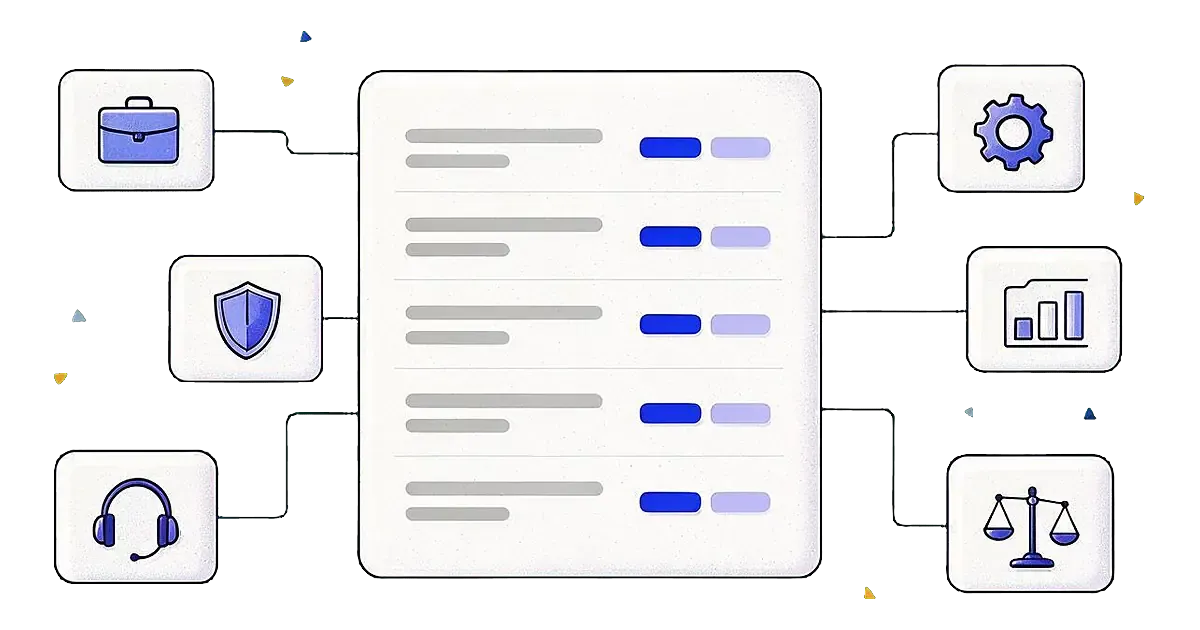
A stakeholder analysis template is a table with one row per stakeholder and columns for their role, interest, influence, attitude and how you will engage them. Copy the template below and fill one row per person or group. Then place each row on a power and interest grid to decide who you manage closely and who you keep informed.
For requirements work, the analysis has a second job. It decides whose needs you elicit, who reviews the requirements and who signs off. The same list later becomes the stakeholders section of your business requirements document template, so it pays to keep it current from the first week.
What is a stakeholder analysis?
A stakeholder is anyone who is affected by a change or who can affect it. Think of the sponsor who pays, the users of the system, the support team, compliance, finance and sometimes outside regulators. A stakeholder analysis identifies those people, then records how much each one cares about the outcome and how much power they have over it.
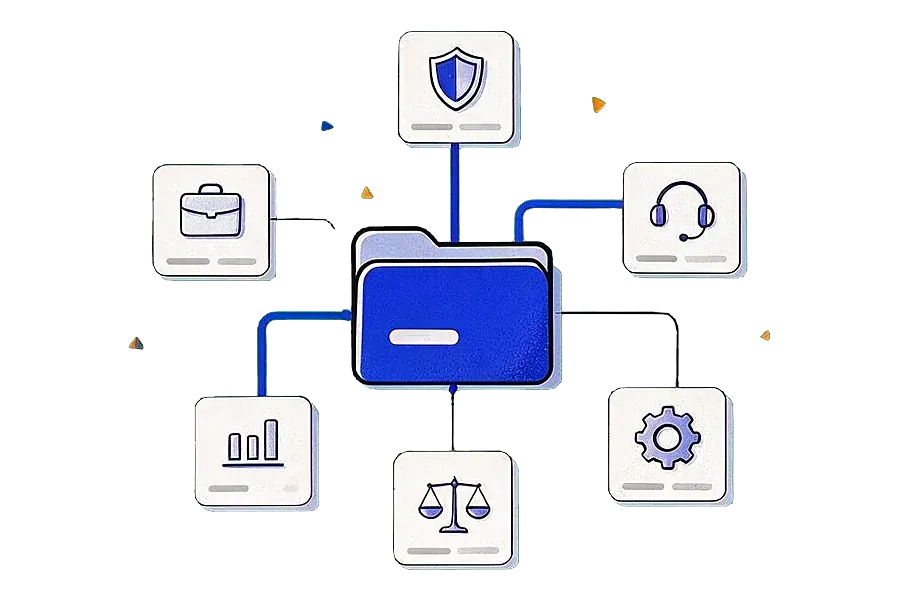
The IIBA’s BABOK Guide, the business analysis body of knowledge, treats stakeholder analysis as part of planning: before you gather requirements, you decide who to involve and how. Project managers do the same work under the name stakeholder register. The template below works for both.
What does a stakeholder analysis template include?
Keep it to one table. Each column answers one question you will need later, when you plan interviews or chase a sign-off.
| Column | What to write | Example |
|---|---|---|
| Name or group | A person, or a group that needs the same thing | Head of payments |
| Role | Their job title and their role in this project | Budget owner and sponsor |
| What they need | The outcome they care about, in their words | Fewer failed transfers reaching support |
| Interest | High, medium or low: how much the outcome affects them | High |
| Influence | High, medium or low: how much they can change scope, budget or dates | High |
| Attitude | Supportive, neutral or resistant, with the reason | Supportive, asked for the change |
| Engagement | Manage closely, keep satisfied, keep informed or monitor | Manage closely |
| Channel and frequency | How and how often you will involve them | Weekly review, sign-off on the BRD |
| Owner | Who on the project team keeps this relationship | Lead business analyst |
How do you fill in a stakeholder analysis template?
Work through the table in this order. Each step uses what the previous one found.
- List everyone first. Brainstorm with the sponsor, read the org chart and ask each person you meet who else should know about the project.
- Write what each one needs. Use their words from a short conversation, not your guess.
- Rate interest and influence. Use three levels. Finer scales create arguments and add little.
- Record attitude with a reason. A resistant stakeholder with a good reason is a requirement you have not found yet.
- Choose the engagement approach from the grid in the next section, then fill the channel, frequency and owner columns.
What does a completed stakeholder analysis look like?
The example below is for a fictional wallet app, Qirsh Wallet, adding a feature that lets users split a bill with saved contacts. Every name and rating is invented for illustration.
| Stakeholder | What they need | Interest | Influence | Attitude | Engagement |
|---|---|---|---|---|---|
| Head of payments (sponsor) | Fewer manual transfers and support tickets | High | High | Supportive | Manage closely |
| Compliance officer | Split requests stay within transfer limits and are logged | Medium | High | Neutral, worried about limits | Keep satisfied |
| Wallet holders (users) | Split a bill without typing amounts by hand | High | Low | Supportive | Keep informed |
| Support team lead | Clear status for every request a contact declines | High | Medium | Neutral | Keep informed, invite to reviews |
| Mobile engineering lead | Stable scope before the sprint starts | Medium | Medium | Neutral | Keep informed |
| Marketing | A launch date to announce | Low | Low | Supportive | Monitor |
Two rows deserve a second look. The compliance officer is neutral but powerful, so the transfer limit becomes an early requirement instead of a late surprise. The support lead has medium influence but high interest, so their questions about declined requests turn into exception flows.
How do you use the power and interest grid?
The power and interest grid places each stakeholder by influence on one axis and interest on the other. Each quadrant suggests an engagement approach:
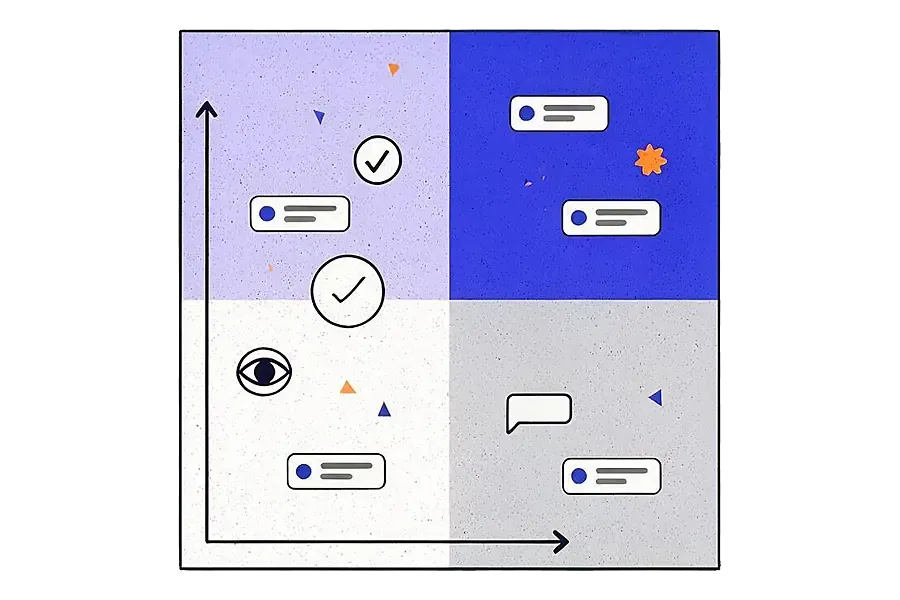
- High influence, high interest: manage closely. Involve them in workshops and reviews, and get their sign-off.
- High influence, low interest: keep satisfied. Short updates, and early warning of anything that touches their area.
- Low influence, high interest: keep informed. Regular updates and a channel for their questions. Users often sit here.
- Low influence, low interest: monitor. Check now and then whether their position has changed.
The grid is a starting point. A stakeholder can move quadrants when a reorganization happens or when the requirements reach their area. Re-plot the grid at each milestone.
What other stakeholder analysis models are there?
The salience model from Mitchell, Agle and Wood’s 1997 paper in the Academy of Management Review rates stakeholders on power, legitimacy and urgency. It helps when the grid puts too many people in one quadrant, because urgency separates the person who needs an answer this week from the one who can wait.
A stakeholder onion diagram draws the same people as rings around the system: the people who operate it, the people who benefit from it, and the wider organization. It suits a workshop wall. The template above can hold the results of any of these models in its interest, influence and engagement columns.
How does stakeholder analysis feed your requirements?
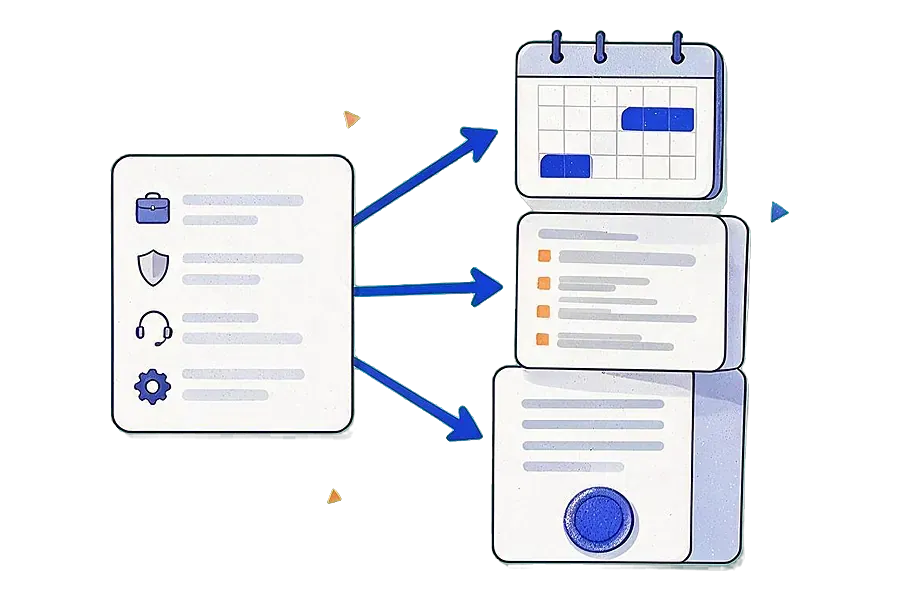
Each high-interest row is a source of requirements. Plan an interview or workshop with it, and record that stakeholder as the source of every requirement they raise. When a requirement is later challenged, you know whom to ask.
Do not confuse stakeholders with actors. An actor is a role that interacts with the system in a use case, such as a wallet holder sending a request. A stakeholder may never touch the system, like the compliance officer, yet still sets rules the system must follow. Our guide on how to write a use case covers actors in detail.
The analysis also tells you who signs off. List the approvers by name in the business requirements document, and agree on the date before writing the final draft. Our business requirements document example shows where the stakeholder table and the approvals sit.
What mistakes make a stakeholder analysis useless?
- Listing only the people in the kickoff meeting. Support, compliance and finance are often missing until they block a release.
- Rating everyone high. If every row is high interest and high influence, the grid tells you nothing. Force a ranking.
- No reason in the attitude column. "Resistant" alone gives you nothing to act on.
- A one-time exercise. The table written in week one is out of date by the first review.
- Sharing the attitude column widely. Notes on who resists and why are sensitive. Keep them in the team’s working copy.
Can you keep the stakeholder list in Flowifex?
Yes. Each Flowifex project has a stakeholder register with name, role or title, organization, email, and an interest level and influence level of high, medium or low. The generated business requirements document includes a Stakeholders section built from that register, so the list in the BRD is never retyped.
The register has no attitude or engagement columns. Keep those judgments in your own copy of the template above, which is also the right place for notes you would not share in a signed document. Requirements in Flowifex carry a source field, so you can record which stakeholder raised each one. See requirements management software for business analysts for how the register, the requirements and the BRD connect.
To prioritize what those stakeholders ask for, our guide to MoSCoW prioritization for requirements shows how to sort the requests into must, should, could and won’t.
Frequently asked questions
A stakeholder register is the list: who each stakeholder is, their role and their contact details. A stakeholder analysis adds judgment to that list: how much each one cares, how much power they have, what they need and how you will engage them. Most templates combine both in one table.
Everyone the change affects or who can affect it, grouped where it makes sense. A small feature may have six to ten rows. A large program may have dozens, often grouped by department. Group people only when they need the same thing and get the same engagement.
At the start of the project, then at each major milestone and whenever someone changes role. Attitudes shift once requirements become concrete, so review the attitude column before every sign-off meeting.
No. A RACI chart assigns who is responsible, accountable, consulted and informed for each task or deliverable. A stakeholder analysis looks at people and groups: their interest, influence and attitude. Many teams use the analysis first, then build the RACI from it.
Read next
Keep every spec in one place. Start with a free project.
Model use cases, link requirements and generate your BRD. Free plan, no card needed.