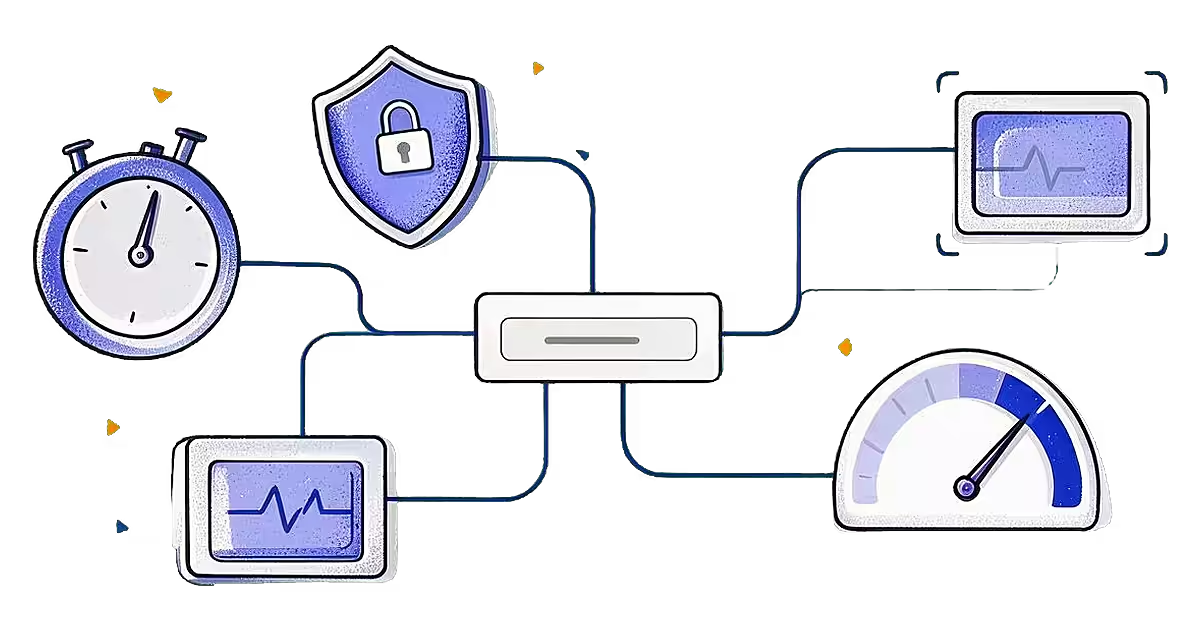
Non-functional requirements describe how well a system must work rather than what it does. They cover how fast it responds, how often it is available, how it protects data, and who can use it. A good non-functional requirement names a quality, a measurable limit and the conditions under which it is checked.
This guide gives a plain definition, the standard categories, and more than twenty examples written so a tester can check them. If you keep requirements in a tool rather than a document, the same wording works in requirements management software for analysts as in Word.
What are non-functional requirements?
A functional requirement says what the system does: “The user can export the report to PDF.” A non-functional requirement sets a condition on that behavior: “The PDF export finishes within 10 seconds for reports up to 50 pages.” The first can be true or false on day one. The second can drift as data grows, which is why it needs its own line and its own test.
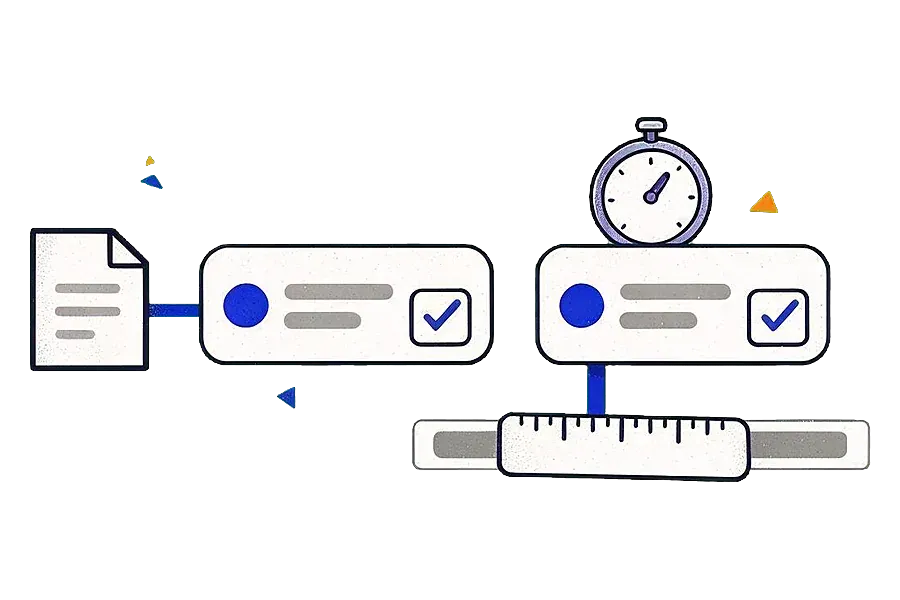
Teams also call them quality attributes, quality requirements or constraints. The names differ, the idea does not. Without them, a system can pass every functional test and still be too slow, too fragile or unusable for some of its users.
| Topic | Functional requirement | Non-functional requirement |
|---|---|---|
| Describes | A behavior the system performs | A quality or limit the behavior must meet |
| Example | The user can reset their password by email. | The reset email arrives within 60 seconds for 99% of requests. |
| Tested by | A functional test case: it works or it does not | A measurement over time, a scan or an audit |
| Usually owned by | Business analyst and product owner | Shared with architects, security and operations |
What are the main types of non-functional requirements?
The most widely used list comes from the product quality model in ISO/IEC 25010. The current version names nine characteristics, summarized on the ISO/IEC 25010 quality model page: functional suitability, performance efficiency, compatibility, interaction capability, reliability, security, maintainability, flexibility and safety.
Functional suitability covers whether the features are complete and correct, so it overlaps with functional requirements. The other eight are where most non-functional requirements come from. Use them as a checklist when you review a draft: for each one, ask whether the system has a limit it must not cross. Functional vs non-functional requirements explains where the line between the two falls.
What are examples of non-functional requirements?
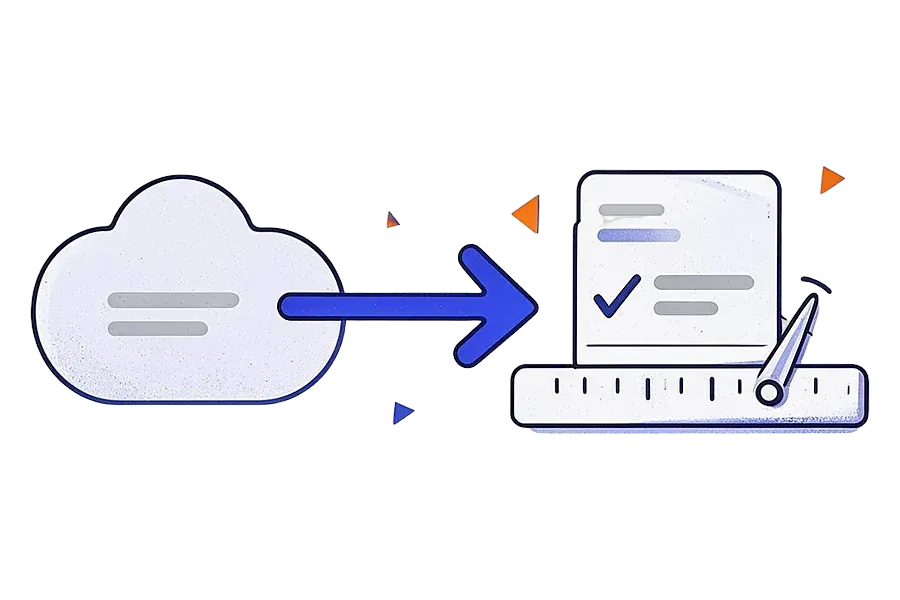
Each example below pairs a vague version with a testable one. The vague version is the kind that slips into documents. The testable version names a number, a scope and a way to check it. All figures are illustrations; set your own with the people who will be held to them.
Performance efficiency
- Vague: “Search should be fast.” Testable: “Search returns results within 1 second at the 95th percentile with 10,000 records per project.”
- “The system supports 500 concurrent signed-in users with page loads under 3 seconds.”
- “A nightly import of 100,000 rows completes within 30 minutes.”
Reliability and availability
Google’s site reliability engineering chapter on service level objectives explains how to express availability as a target over a window. Borrow that shape.
- Vague: “The system should always be up.” Testable: “The API is available 99.9% of minutes in each calendar month, excluding announced maintenance.”
- “After a server failure, service resumes within 15 minutes with no loss of data saved more than 5 minutes earlier.”
- “A failed payment call is retried up to 3 times before the user sees an error.”
Security
For web applications, the OWASP Application Security Verification Standard is a ready source of checkable security requirements, grouped by verification level.
- Vague: “The app must be secure.” Testable: “The app meets ASVS level 2 for authentication and session management.”
- “Passwords are stored only as salted hashes; no plain-text password appears in logs.”
- “A session expires after 30 minutes without activity.”
- “Every change to a customer record is logged with the user, time and old and new values.”
Interaction capability and accessibility
Accessibility requirements are easiest to write against a published standard. The W3C Web Content Accessibility Guidelines (WCAG) 2.2 define success criteria at levels A, AA and AAA, and many organizations target AA.
- Vague: “The site should be accessible.” Testable: “All public pages meet WCAG 2.2 level AA.”
- “Every action can be completed with a keyboard alone.”
- “A first-time user completes the sign-up flow without help in under 3 minutes in moderated tests.”
Compatibility
- “The web app works in the two latest versions of Chrome, Edge, Firefox and Safari.”
- “Exported files open in the current desktop versions of Microsoft Word and Excel.”
Maintainability and flexibility
- “A new tax rate can be added through configuration without a code release.”
- “Automated tests cover every rule in the pricing module and run on each change.”
- “The system can move to a second cloud region with no change to application code.”
Safety and compliance
- “A dose entered above the configured maximum is rejected and cannot be overridden by the operator.”
- “Personal data is deleted within 30 days of an account closure request.”
How do you write a testable non-functional requirement?
- Name the quality. Performance, availability, security, accessibility. One quality per requirement.
- Give a number and a unit. Seconds, percent of minutes, number of users, WCAG level.
- Say where it applies. Which screens, which API, which data size, which users.
- Say how it is measured. Percentile, time window, tool or audit.
- Get the number from its owner. Operations sets availability; security sets password rules. Do not invent a figure to fill the gap.
Acceptance criteria follow the same logic on the functional side. These acceptance criteria examples for user stories show the matching format.
Where do non-functional requirements go in a BRD or PRD?
Most templates give them their own section after the functional requirements. That keeps them visible, but it also separates them from the features they constrain. Fix that with references: give each non-functional requirement an ID and cite it from the features it applies to.
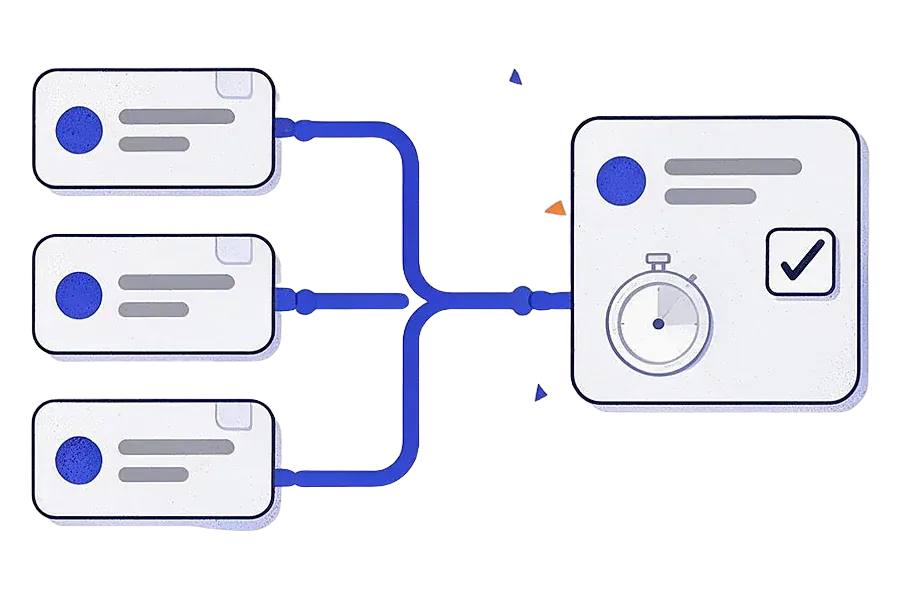
In Flowifex, requirements have four types (business requirement, business rule, feature and requirement), each with a MoSCoW priority, a status and acceptance criteria. A non-functional requirement is written as a requirement and linked to the use case steps it constrains. The generated BRD then lists it in its requirements section. Our free BRD generator from use cases shows the layout, and the PRD template guide shows where they sit in a product document.
Linking matters most when something changes. If the 2-second search limit moves to 1 second, you want to see every flow it touches. A matrix that can trace requirements to use case steps answers that in one view.
Are constraints the same as non-functional requirements?
Not quite. A constraint limits the solution rather than its quality: “The system must run on the company’s existing cloud account” or “Reports must be exported as PDF/A for archiving.” Many templates file constraints next to non-functional requirements because both restrict the design. Keep them in separate lists anyway.
The test is simple. A non-functional requirement can be measured on the running system, such as a response time or an availability figure. A constraint is a decision already made, usually by someone outside the project, and it is checked by inspection. Mixing them hides the decisions that nobody on the team is allowed to change.
How do you prioritize non-functional requirements?
Not every quality limit is a must. Rank them the same way as features, and be honest about cost: 99.99% availability costs far more to run than 99.9%. The MoSCoW prioritization method works well here, because a “won’t have this time” line for a quality target is a useful decision to record.
Frequently asked questions
It is a rule about how well the system must work, such as how fast, how available, how secure or how accessible. It sets a measurable limit on behavior instead of describing a new behavior.
Usually non-functional, because it constrains how features behave, for example session timeouts or encryption. A visible security feature, such as two-factor sign-in, can be written as a functional requirement with its own non-functional limits.
There is no fixed number. Walk the ISO/IEC 25010 characteristics and write one for each limit that matters to users or operations. A small feature may need three; a regulated system may need dozens.
The business analyst usually drafts them, but the numbers come from their owners: operations for availability, security for access rules, design and accessibility specialists for usability targets.
Read next
Keep every spec in one place. Start with a free project.
Model use cases, link requirements and generate your BRD. Free plan, no card needed.