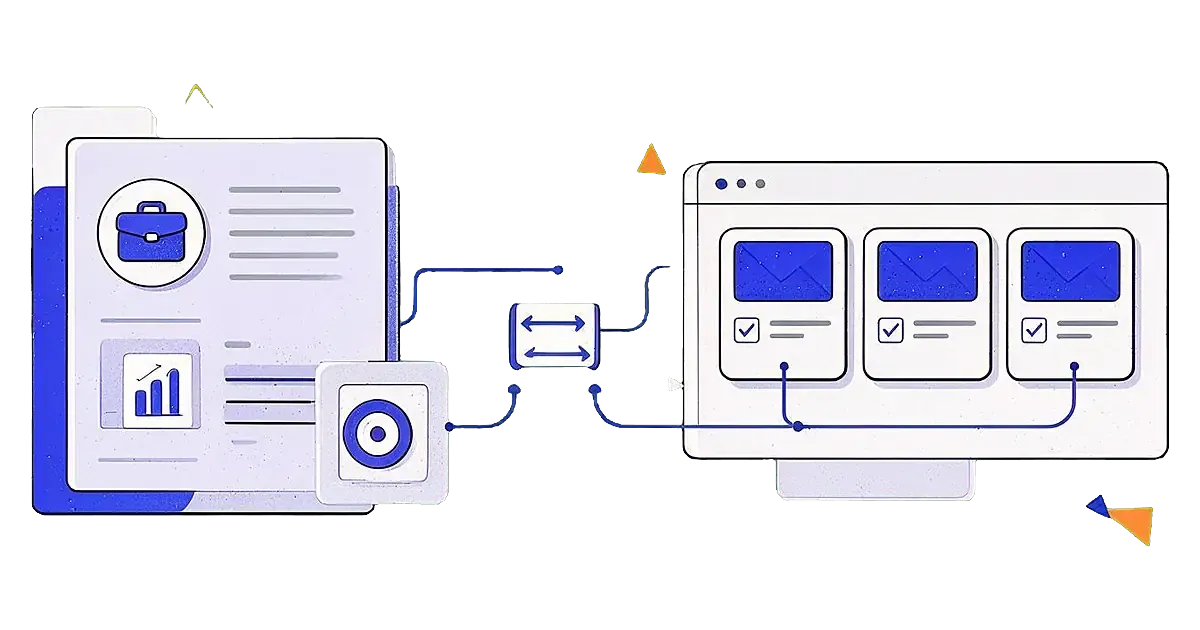
A business requirements document (BRD) says what the business needs and why it is worth doing. A product requirements document (PRD) says what a product or release will do to meet that need. The BRD is about the problem and the business outcome; the PRD is about the solution and how it should behave. Many projects use both, in that order.
This page compares the two side by side, shows one initiative written both ways, and explains when you need one, the other or both. If you already know which one you need, start from the free business requirements document template or the product requirements document template.
What is a BRD?
A BRD describes a business need in terms the business signs off on. It sets out the problem, the objectives, the scope, the stakeholders and the business requirements a solution must meet. It is usually written by a business analyst and approved by a sponsor before money is committed. The IIBA BABOK Guide calls these business requirements: statements of goals, objectives and outcomes that explain why a change is being made.
What is a PRD?
A PRD describes a specific product or release. It sets out the users, the goals and how success is measured, the scope of the release, and the functional and non-functional requirements the team will build and test. It is usually written by a product manager for engineering, design and QA. It is the document the team plans sprints against.
What is the difference between a PRD and a BRD?
The two documents ask different questions, for different readers, at different times. The table compares them on the points that most often cause confusion.
| Topic | Business requirements document (BRD) | Product requirements document (PRD) |
|---|---|---|
| Question it answers | Why should we do this, and what must the business get from it? | What will this product or release do, and for whom? |
| Written from | The business’s point of view | The user’s and the product’s point of view |
| Usual author | Business analyst | Product manager |
| Approved by | Business sponsor or steering group | Product lead with engineering and design |
| When it is written | Before a solution is chosen or funded | After the direction is agreed, before or during build |
| Typical requirements | Business requirements and rules: “Cut invoice approval time to two days” | Features and functional requirements: “Managers can approve an invoice from the email notice” |
| Success measured by | Business outcomes such as cost, revenue or compliance | Product metrics such as adoption, task success or errors |
| Life span | One per initiative or project | One per product release or major feature |
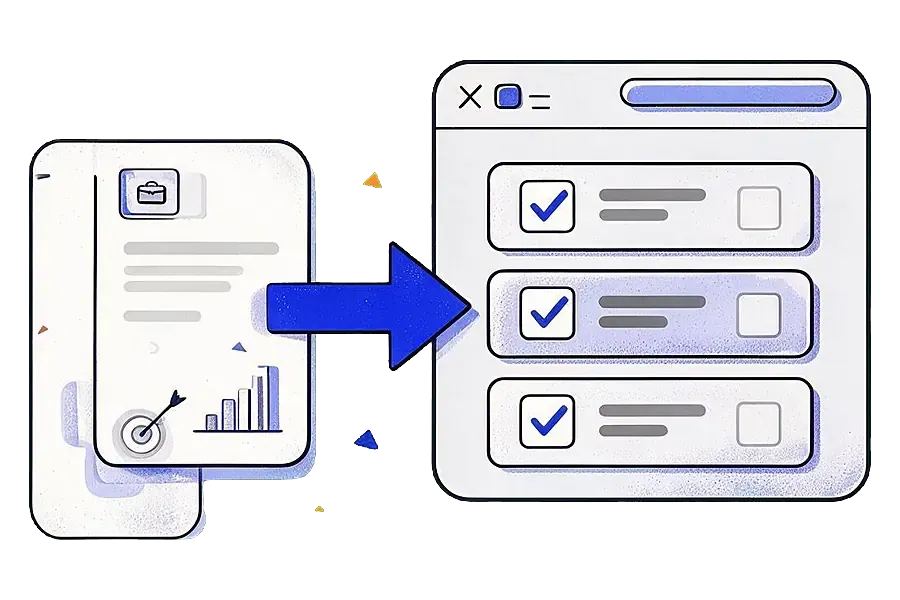
The simplest way to remember it: the BRD can be written without naming a product at all. The PRD cannot. If you remove every screen, feature and release from a BRD and it still makes sense, it is a good BRD.
What does the same initiative look like in each document?
Take a fictional finance team whose supplier invoices wait an average of nine days for approval. Late payments cost them early-payment discounts. Here is how each document handles it.
| Item | In the BRD | In the PRD |
|---|---|---|
| Problem | Invoices wait nine days for approval, so the company misses early-payment discounts. | Approvers do not see pending invoices until they open the finance system. |
| Objective | Approve 90% of invoices within two business days. | Raise the share of invoices approved from the notification to 60% in the first quarter. |
| Requirement | BR-4: Every invoice over $5,000 needs a second approver. | FR-12: When an invoice over $5,000 is approved, the app routes it to the second approver and shows both names. |
| Out of scope | Changes to the supplier payment run. | Mobile app; approvals by text message. |
| Readers | Finance director, procurement, IT steering group | Engineering, design, QA, support |
Notice how BR-4 and FR-12 relate. The business rule comes first and does not care how it is met. The functional requirement is one way to meet it in this product. If the product changes next year, FR-12 may change; BR-4 stays.
Where do the MRD, FRD and SRS fit?
Some organizations use a longer chain of documents. You may meet these:
- MRD (market requirements document). The market opportunity and customer needs, written before the PRD in product companies.
- FRD (functional requirements document). A detailed list of system functions, often written after the BRD in IT departments.
- SRS (software requirements specification). A full specification of a software system, functional and non-functional, often used in contracts. ISO/IEC/IEEE 29148, the international standard for requirements engineering, describes its content.
Product companies tend to use MRD and PRD. IT departments and consultancies tend to use BRD and then FRD or SRS. Few teams need all of them. Pick the ones your readers actually ask for. For the SRS, the software requirements specification template gives a full outline.
When do you need a BRD, a PRD or both?
- BRD only. An internal system change, a vendor selection, or a project where a supplier will design the solution. The business states the need; the supplier answers it.
- PRD only. A product team adding features to its own product, where the business case is already clear and the product manager owns it.
- Both. A new product or a large change that needs funding first. The BRD gets the approval; the PRD guides the build.
Small teams often merge the two. That works if you keep the sections separate inside one document: business objectives and rules first, product requirements second. Merging the content line by line is what causes trouble, because a sponsor then signs off on screen details they never meant to approve.
How do you keep a BRD and a PRD in step?
Give every business requirement an ID and reference it from the product requirements that meet it. Then any business requirement with no product requirement behind it is a gap, and any product requirement with no business requirement is either scope creep or a missing business rule. A requirements traceability matrix is the standard way to show those links.
Flowifex generates a BRD, not a PRD. It builds a 12-section business requirements document from your use cases, requirements and business rules. Business requirements, features and requirements are separate sections, and a traceability section links them to use case steps. You can share it by link or export it to Word and PDF. See the annotated business requirements document example for what each section looks like. For a PRD, use the free template linked above in any editor.
What mistakes do teams make with PRDs and BRDs?
- Solutions in the BRD. “Add an approve button to the email” is a product decision. In a BRD it locks the team into one answer before anyone has looked at options.
- No business reason in the PRD. A PRD with features but no link to an objective makes it hard to cut scope, because nothing says which features matter most.
- Two documents that disagree. If the BRD says two approvers and the PRD says one, the team builds whichever it read last. Shared IDs prevent this.
- Writing both when one is enough. A three-week feature in an existing product rarely needs a BRD.
Frequently asked questions
Usually the BRD. It gets the business need approved; the PRD then describes the product or release that meets it. Product teams adding features to their own product may skip the BRD.
A business analyst usually writes the BRD and a business sponsor approves it. A product manager usually writes the PRD for engineering, design and QA.
Yes, on small projects. Keep the business objectives and rules in their own section, separate from the product requirements, so each reader approves only what they own.
No. Flowifex generates a business requirements document with 12 sections from use cases and requirements, and exports it to Word and PDF. A free PRD template is available on the blog.
Read next
Keep every spec in one place. Start with a free project.
Model use cases, link requirements and generate your BRD. Free plan, no card needed.